
Sum Insured vs Market Value: Why Your Home’s Price Doesn’t Match Its Cover
Market value and sum insured measure different things. Most SA homeowners use the wrong number and pay the price. Learn the critical difference.
Quick Summary
Market value is what buyers pay for your home (land + location + structure).
Sum insured is what it costs to rebuild only the structure.
They’re never the same number. Using market value for sum insured creates massive underinsurance or wastes money on over insurance.
What you must do: Calculate rebuild cost separately from market value. They measure completely different things.
You bought your home for R2 million. You insured it for R2 million.
A fire destroys the structure. Rebuild cost: R1.5 million (no land, just bricks and mortar).
You’ve been paying premiums on R500,000 of unnecessary cover. Money wasted every month for years.
Or worse: You insured for R1.2 million because “the bond is only R1.2M.” Rebuild actually costs R1.8 million. You’re R600,000 short. The average formula reduces every claim.
This confusion costs South African homeowners millions every year. Here’s how to get it right.
What Market Value Means
Market value is the price a buyer pays for your complete property in today’s market.
Market value includes:
- Land (the ground your home sits on)
- Location (beach, city, good schools cost more)
- Structure (the actual building)
- Garden
- What buyers are willing to pay today
Factors that increase market value but don’t affect rebuild cost:
- Great location (beachfront, city center, top schools)
- Big piece of land
- Fancy neighbourhood
- Good investment area
A 150m² home in Camps Bay (prime location, small land, sea views) might sell for R8 million.
A 150m² home in Brackenfell (standard suburb, larger land, no views) might sell for R2 million.
Rebuild cost for both? Almost identical – around R2.7 million (150m² × R18,000/m²).
Market value and rebuild cost measure completely different things.
What Sum Insured Means
Sum insured is the maximum amount your insurer pays to rebuild your structure after total destruction.
Sum insured includes:
- Main dwelling (every room, every wall, roof)
- Outbuildings (garages, garden sheds, domestic quarters)
- Permanent fixtures (built-in cupboards, kitchen, bathrooms)
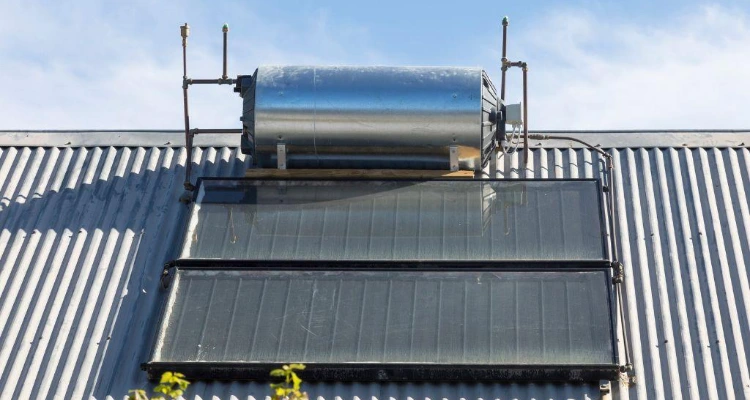
- Solar panels and inverters
- Security systems (burglar bars, electric fencing, gates)
- Pools and outdoor structures
- Paving and permanent landscaping
- Demolition and rubble removal costs
Sum insured does NOT include:
- Land value (you still own the land after a fire)
- Fancy neighbourhood (prestige doesn’t need rebuilding)
- What buyers are willing to pay
- Your bond amount
- What you originally paid for the home
Your sum insured must equal the cost to rebuild your structure exactly as it was, in today’s rand terms, using current building costs.
Learn how to calculate your exact sum insured
The Critical Difference
Example 1: Prime Location Property
Market value: R4 million (small house, prime suburb, excellent location)
- Land: R2.5 million (scarce, desirable area)
- Structure: R1.5 million
Correct sum insured: R1.5 million (rebuild cost only)
If you insure for market value (R4M): You pay premiums on R2.5M of unnecessary cover. The land doesn’t need insurance – you still own it after a disaster.
Example 2: Suburban Family Home
Market value: R1.8 million
- Land: R400K
- Structure rebuild cost: R2.2 million (quality finishes, solar, security)
Correct sum insured: R2.2 million
If you insure for market value (R1.8M): You’re underinsured by R400,000. Average formula applies. Every claim gets reduced.
Example 3: Estate Home (Security Estate)
Market value: R3.5 million (estate premium, security, location)
- Land: R800K
- Estate levies & location premium: R500K
- Structure: R2.2 million
Correct sum insured: R2.2 million
Common mistake: “My bond is R3M, so I’ll insure for R3M.” That assumption is wrong. You’re paying premiums on R800K you don’t need.
Why People Confuse Them
- “I paid R2M, so I’ll insure for R2M” – What you paid years ago is irrelevant. Building costs change constantly.
- “My bond is R1.5M, so that’s my cover” – Your bond is what you owe the bank, not rebuild cost.
- “The bank valued my home at R2.5M” – Bank valuations include land and are for lending, not for rebuilding.
- “Municipal valuation is R1.8M” – Municipal valuations are for property tax and include land value.
- “Estate agent said it’s worth R3M” – Estate agents quote market value (what buyers pay), not rebuild cost.
How to Get Your Sum Insured Right
Step 1: Ignore Market Value Completely
Don’t look at what you paid, current market listings, your bond amount, municipal valuations, or estate agent estimates. These are all market value. Irrelevant for insurance.
Step 2: Calculate Rebuild Cost
Use online calculators (measure floor area, select quality, add features), professional valuation (typically R2,000-R5,000, most accurate), or insurer assistance (provide home details, get recommendation).
Read the complete calculation guide with 3 methods
Step 3: Add All Permanent Fixtures
Include solar panels (typically R150K-R300K+), security systems (typically R100K-R200K+), water systems (typically R30K-R80K+), pools and outdoor structures (typically R50K-R150K+).
Step 4: Update Annually
Building costs increase every year. Update your sum insured at every renewal, even if the market value stays flat.
Real Consequences of Getting It Wrong
Underinsurance (Most Common)
You insure for R1.5M. Rebuild cost is R2M. You’re 25% underinsured.
Fire causes R400K damage. Average formula: You only get R300K. You pay R100K yourself.
Read how the average formula costs you money on every claim
Overinsurance (Wastes Money)
You insure for R3M. Rebuild cost is R2M. You’re paying premiums on R1M you don’t need.
Small benefit: You might get some extra payout. But you’re throwing away hundreds of rand monthly for a very small gain.
Common Questions About Market Value vs Sum Insured
Should land be insured?
No. Land can’t be destroyed. After any disaster, you still own the land. Only insure the structure.
Does location affect sum insured?
Only if it affects building costs (remote areas = higher transport costs). Fancy neighbourhood (prestige, views) doesn’t affect sum insured.
What if market value drops but rebuild cost increases?
This happens often during property slumps. Always base sum insured on current rebuild cost, not market value.
Can sum insured be higher than market value?
Yes, absolutely. Luxury finishes or small land plots can mean rebuild cost exceeds market value. This is normal and correct.
Get Your Cover Right From the Start
Most homeowners use the wrong number for their sum insured. They look at market value, bond amounts, or purchase price.
These numbers are irrelevant. Your sum insured must equal the rebuild cost. Nothing else.
Calculate rebuild cost properly. Update it annually. Get your cover right from day one.
With 21+ years and 197,000+ claims paid, we help homeowners avoid the market value trap.
Get a Quote | Speak to a Consultant
Related Articles
Sum Insured Explained: What Every South African Homeowner Must Know
How to Calculate Sum Insured for Your Home: 3 Methods (South Africa)
The Average Formula Explained: Why Underinsurance Costs You on Every Claim
Solar Panels, Inverters & Sum Insured: What SA Homeowners Must Include
About oobainsure: With 21+ years of experience, we’ve paid 197,000+ claims, delivered R1.2 billion+ to customers, and earned a 9.3/10 TrustIndex rating on Hellopeter. We insure 200,000+ South Africans who trust us with what matters most. Protection you understand.


Ranked #1 in Home Loans on Hellopeter


Average rating of 4.86 from over 4 550 reviews
Simply The Best
Ooba home loans services are simply the best. My Consultant Bianca Dancer was so hands on and helpful from the get go. She guided me through the entire process and put me at ease being a first time buyer. I highly recommend their services.
Tia J
Excellent Service
Jay Govender and Maleshini Reddy from OOBA provided outstanding assistance and guidance in securing our home loan. Response times were excellent and they were professional and friendly.
Brice G
Bond Application
Estelle Vorster was really helpful in securing the best deal for my home loan, she not only negotiated a lower interest rate she went as far as securing 50% discount on the transfer costs.
Butana M